Episode 1 · Resources
AI Automation for Logistics: a beginner's guide
Everything from the video in one place: what the tools are, how to set them up step by step, the four ways to connect your TMS, inbox and tracking, and instructions you can copy and paste.
Links
Use the official pages, so you're always installing the real thing.
The tools, in plain English
No experience needed. If you can send an email, you can do this.
What AI is
Programs that learned by reading a huge amount of writing, so they understand language and write it back like a person would. You just talk to it.
The catch: it only knows what you show it, and it can make mistakes. A person should check anything important.
The Claude app
An AI assistant made by Anthropic (ChatGPT is a similar one, made by OpenAI). It's a chat window: you type, it answers, and you can drag in a PDF or spreadsheet.
It can only see what you hand it.
The assistant at your desk
The Claude app is like a smart assistant on the phone: you read everything to them. Claude Code sits at your computer, in one folder you choose. It opens your files, uses your programs and connects to your other systems. You still just talk to it in plain English. No code.
What a terminal is
A plain window where you type instructions instead of clicking. Every computer has one. It looks old-school, but you can't break anything by opening it. Once Claude Code runs inside it, you just type normal sentences.
Set it up in 5 steps
Take it slow. About ten minutes the first time.
Make a Claude account
Go to claude.ai. Claude Code needs a paid plan; Pro is the cheapest one that includes it.
Open your terminal
Mac: hold ⌘ Command, press Space, type
terminal, press Enter.
Windows: click Start, typePowerShell, press Enter.Install Claude Code
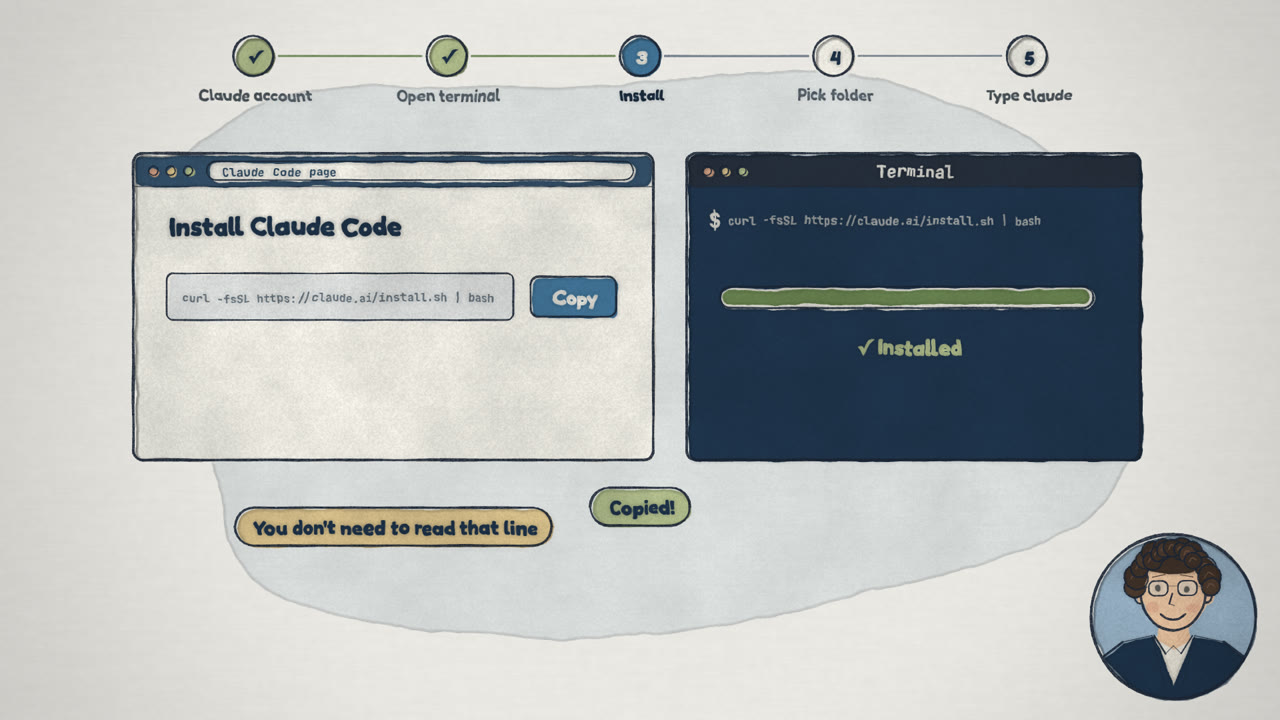
On the Claude Code page, click Copy next to the install line. Click into your terminal, paste, and press Enter. Give it a minute.
You don't need to understand that line. It just downloads Claude Code and sets it up.
Pick your folder
Make a folder on your desktop called
logistics. In the terminal, typecdand a space, drag the folder into the terminal window, and press Enter. That tells the terminal "work in this folder."Type
claudePress Enter. The first time, your browser opens so you can sign in. When it asks if you trust this folder, say yes. From here on, it's just like chatting.
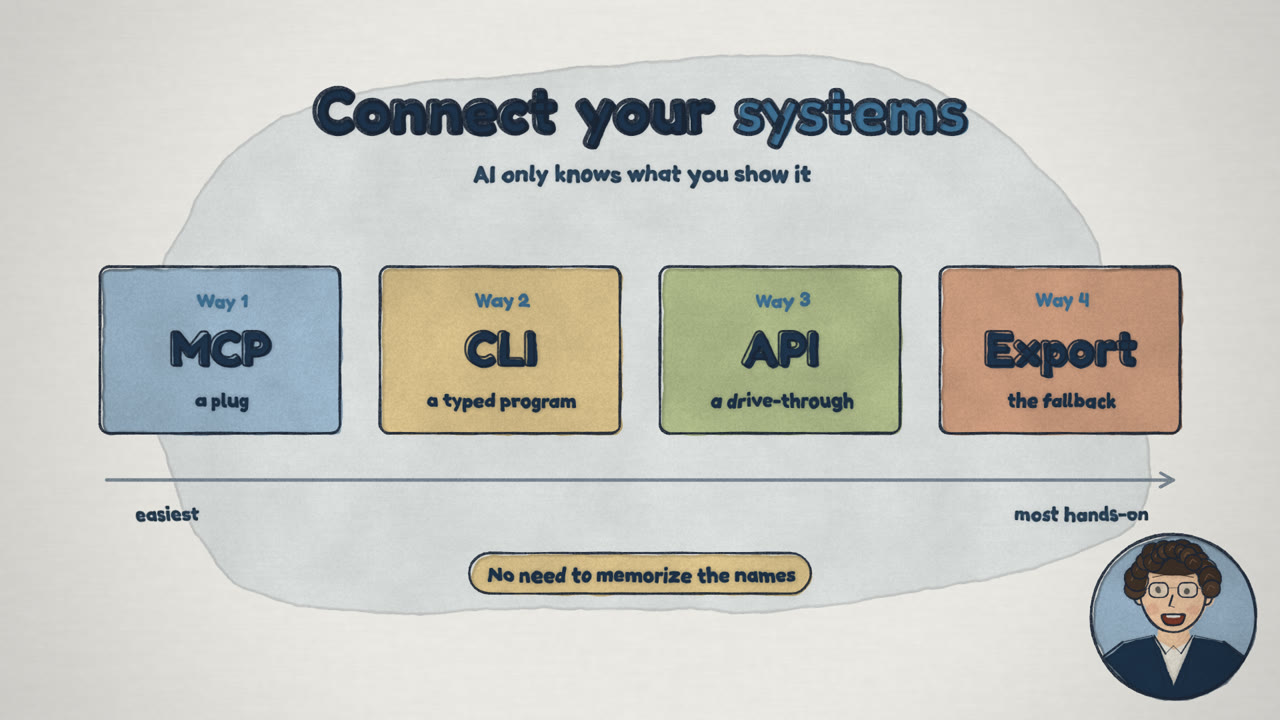
The 4 ways to connect a system
AI only knows what you show it. From easiest to most hands-on. You'll probably use all four.
A plug built for AI
Gmail, Outlook, Google Drive and Slack have one. In the Claude app: Settings → Connectors, pick one, sign in. In Claude Code, just ask it to set one up. Your inbox is usually the easiest system to connect first.
A program you control by typing
Some software companies make one for their product. Claude Code is great at using them, because it lives in the terminal, right where those programs run.
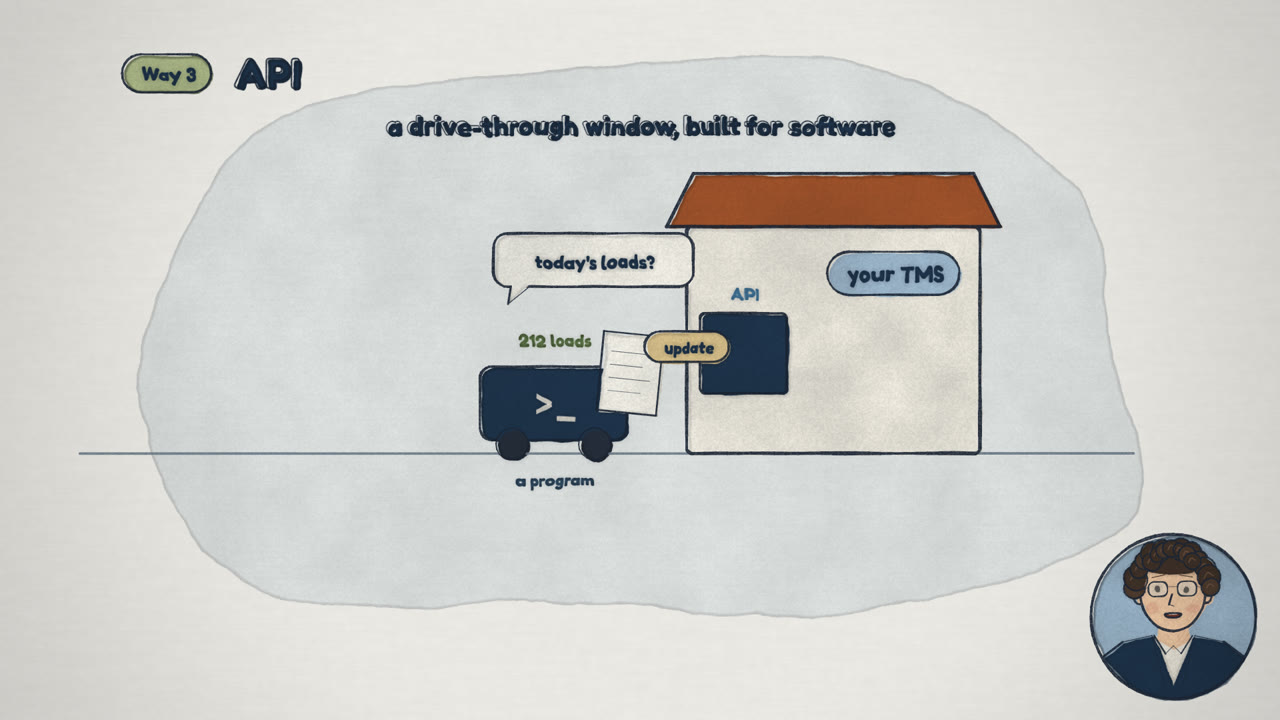
A drive-through window for software
The big one for logistics. Most TMS, ELD and load board platforms have an API: another program pulls up, asks for today's loads, gets them handed back, and can drop off an update.
- Ask your rep for API access, a key and the documentation.
- Save the key in your logistics folder. It's a password, just for software.
- Hand Claude Code the documentation and ask it to build the connection.
The fallback
Almost every system has an export button that gives you a spreadsheet. Save it in your logistics folder and Claude Code can read it. Works on day one.
Want it hands-off? Claude can work in your web browser: log in, click export and save the file to your folder every morning.
Copy and paste
Ask your TMS rep the first one. Type the rest into Claude Code, in your logistics folder.
Do you have an API? Can I get an API key for it? And where's the documentation?
Set up my Gmail connection for me.
Here's the documentation for our TMS API: [paste the link]. My API key is saved in this folder. Build me a connection that pulls today's loads, and test it. Read-only for now.
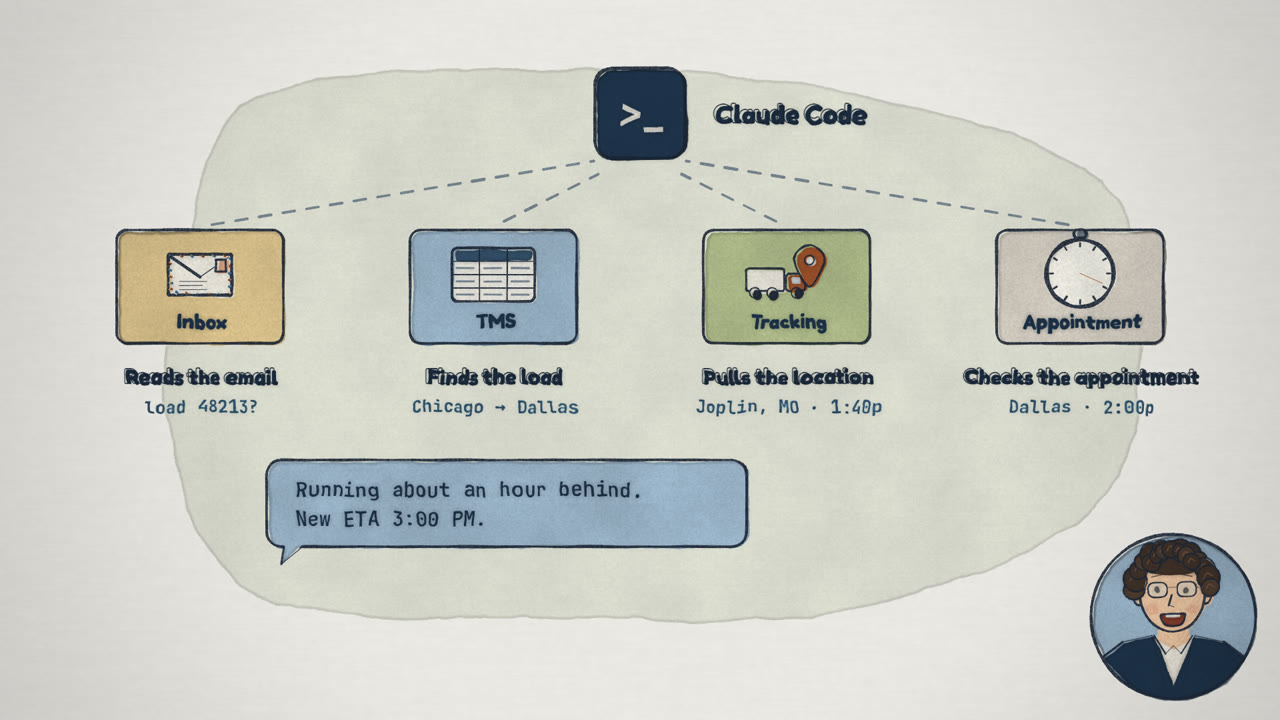
A customer emailed asking about load 48213. Find the load in the TMS, get the truck's last location from the ELD, check the delivery appointment, and draft a reply. Don't send it.
Which loads delivered this week but still don't have a POD in the TMS? Search the inbox for the paperwork and match up what you find.
Which customers emailed today about a load that's running late?
What to build first
Quotes
Reads quote requests from your inbox, pulls your history on that lane, and drafts a reply with the rate left blank for you.
Check calls
Every couple of hours, finds the loads that went quiet and drafts a text to each driver.
Billing
Before an invoice goes out, compares the rate con, BOL, POD and carrier invoice, and lists anything that doesn't match.
Morning briefing
One page: which loads need you today, which customers are waiting on an answer, and what's stuck in billing.
Guardrails
Start read-only
Let it look at everything before you let it change anything. Only connect accounts your company has approved.
A person approves
AI can make mistakes. Keep a person approving anything that goes to a customer or a carrier.
Vet every carrier
Don't let AI skip carrier vetting. Fraud and double brokering are real.
Its own API keys
Give it separate keys so you can see exactly what it did and turn it off anytime.
Chapters
- The problem: AI can't see your systems
- What is AI?
- What is Claude?
- What is Claude Code?
- What is a terminal?
- Setting it up, step by step
- Connecting your systems
- Once it's connected
- Use cases to build first
- Guardrails
- Get everything from this video
Want it wired in for you?
Benmore builds AI systems for logistics teams: your TMS, inbox and phones connected, so it just runs on its own.
Talk to Benmore