Episode 4 · Resources
What Is a Forward Deployed Engineer? (And Does Your Business Need One?)
Everything from the video in one place: what a forward deployed engineer is, how it's different from a consultant or rented developers, what working with one looks like from start to finish, whether your business needs one at all, and five questions to ask before you hire one.
What a forward deployed engineer is
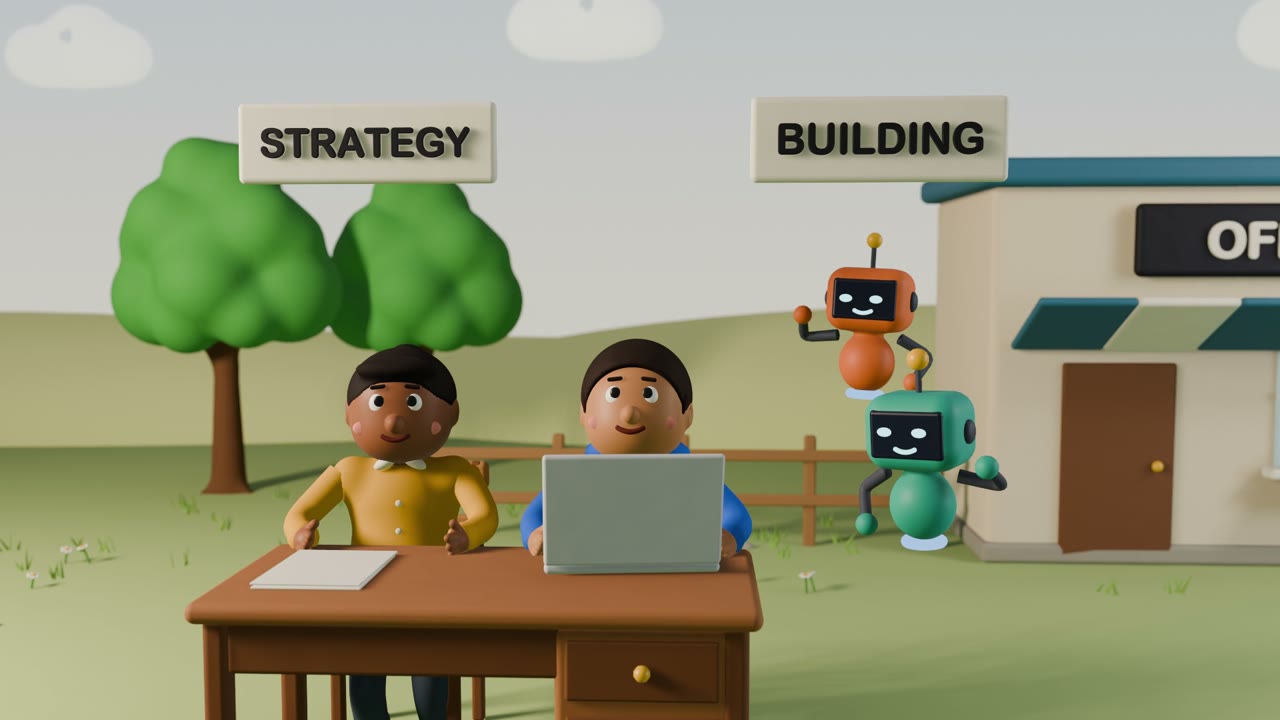
One engineer who sits with you, figures out what you actually need, and then builds it. Both halves: the strategy and the building, owned by the same person, start to finish.
The telephone game
A salesperson, then a consultant, a project manager, an analyst and a designer, and then a team of five to fifteen developers you never meet. Every hand-off loses a little of what you actually meant. The Standish Group has tracked over 50,000 technology projects, and roughly two in three end in partial or total failure; McKinsey and Oxford found large IT projects run 45% over budget on average.
No middlemen
Take the person who's building the solution and put them in direct contact with the person who needs something built. Nothing lost in translation.
Out where the action is
In the military, "forward deployed" means stationed out where the action is, not back at base. Palantir, the data company, took its engineers out of the office and put them on site with the customer, right inside the problem. Internally, they called them Deltas.
AI compressed the work
For a long time this only made sense for huge contracts, because one engineer couldn't build a whole system alone. Now one engineer can direct a handful of AI agents, and a lot of work that used to take a team of ten takes one person. That's why the role is exploding: job postings went up more than 800% in the first nine months of 2025, and OpenAI and Anthropic, the companies behind ChatGPT and Claude, are hiring them as fast as they can.
Consultant, staff augmentation, or a forward deployed engineer
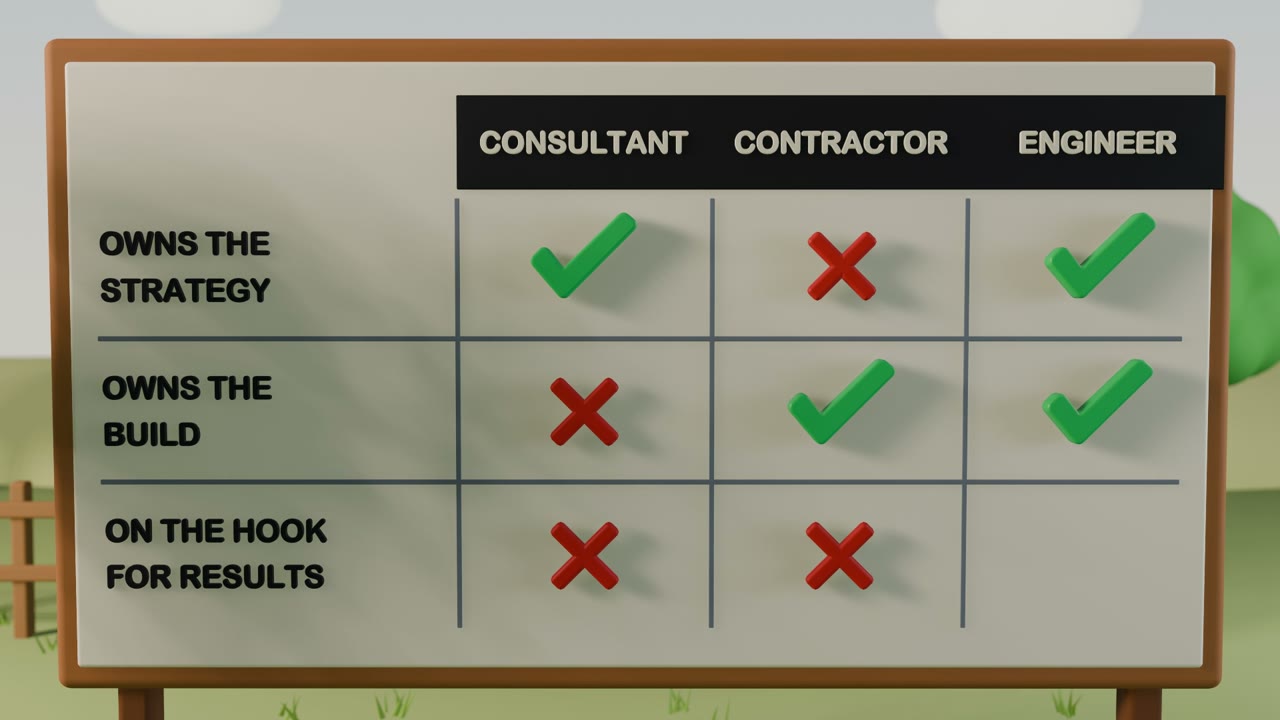
You've probably heard all three names. Here's who owns what.
Hands you a recommendation
Interviews your team and hands you a plan, often a very nice slide deck. Then somebody else has to go and build it.
- Owns the strategy
- Doesn't own the build
- Not on the hook for results
Rented developers
They build exactly what you tell them. Great if you know precisely what you want and have someone to run the project: you don't need more than hands.
- Doesn't own the strategy
- Owns the build
- Not on the hook for results
Owns both
Helps decide what to build, builds it, and is on the hook for whether it actually works in your business.
- Owns the strategy
- Owns the build
- On the hook for results
The relationship is closer to a lawyer and a client than a boss and an employee. A good one will push back and tell you when an idea isn't worth the money. If they can't do that, they're not a forward deployed engineer. They're just extra hands.
What working with one looks like
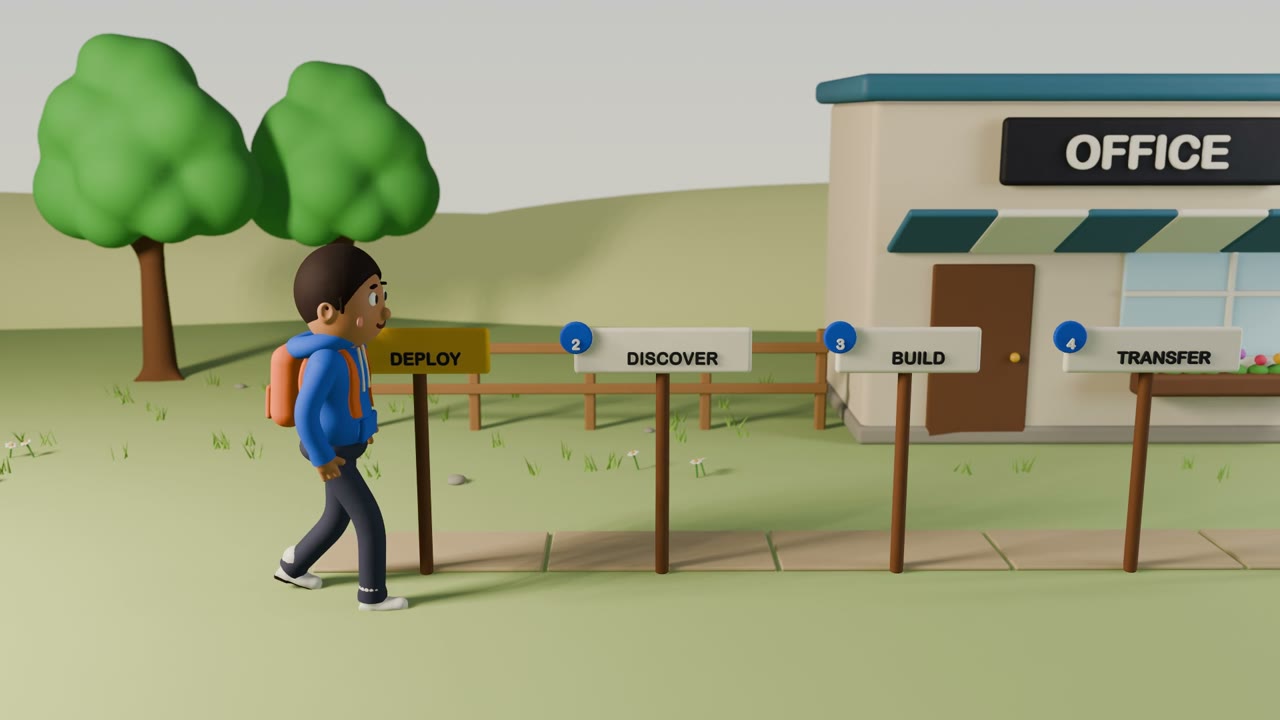
At Benmore it runs in five phases. AI made building faster; it didn't make deciding what to build any easier, so the first two phases are about the what.
Deploy
The engineer embeds with you. Not a kickoff call and a questionnaire: they sit with the people doing the work, your dispatcher, your billing person, and watch the real process, weird workarounds and all.
Discover
Pin down the what, written down as a mission: what we're building, what we're not building, and what done looks like. Expect a lot of "yes, if": yes, we can do that, if this other thing moves to next month.
Build
Because the engineer directs AI agents, you see something working in days, not months. You click around a rough version, say what's off, and it changes that week. You talk to the person building it the whole way through.
Transfer
Before they go, they hand it over properly: three documents, a knowledge agent and practice jobs for your team. More on that below.
Exit
The engineer leaves. Forward deployed engineers succeed when they are no longer needed. Ongoing support is a separate conversation, but you should never be stuck needing us.
What gets handed over
The part that surprises people: the engineer leaves. This is what stays behind so your team can run it.
A runbook
So whoever looks after the system can find the answer to any problem in under sixty seconds.
A system overview
Not just what was built, but why.
The full spec
The blueprint of everything it was built to do.
A knowledge agent
An AI assistant that has read the whole project and can answer your team's questions about it, any time.
Practice jobs
Small jobs, like fixing a bug or rolling back an update, so your team learns the system by working on it.
Do you need one?
Honestly, not always. We're a company of forward deployed engineers, and sometimes the answer is no.
If the job is already solved
- An off-the-shelf tool already does the job. Just buy it.
- You know exactly what to build and you have someone technical to run it. Rent some hands.
If a few of these sound familiar
- Someone on your team spends hours every week copying data between systems that don't talk to each other.
- You've tried two or three software products, and none of them fit how you actually work.
- You know something is costing you money, but you can't say exactly what the fix is.
- You've already tried AI, and it turned into a pilot nobody uses.
That last one is more common than you'd think. In 2025, MIT found that companies had put $30 to $40 billion into generative AI and 95% of them had no measurable return to show for it. Not because the technology didn't work, but because the tools didn't fit how the business actually runs. It isn't a technology problem. It's a "what" problem.
Five questions to ask before you hire one
Ask them of whoever you talk to, us included.
Will I be talking to the person who actually builds it?
If there's a project manager in between, it's the telephone game again.
When will I see something working?
The answer should be days, or a couple of weeks. Not a quarter.
What won't you build?
A good engineer will tell you what to cut. If the answer is "we can do anything", be careful.
What do I get when you leave?
Ask about the runbook, the documentation, and how your team gets trained.
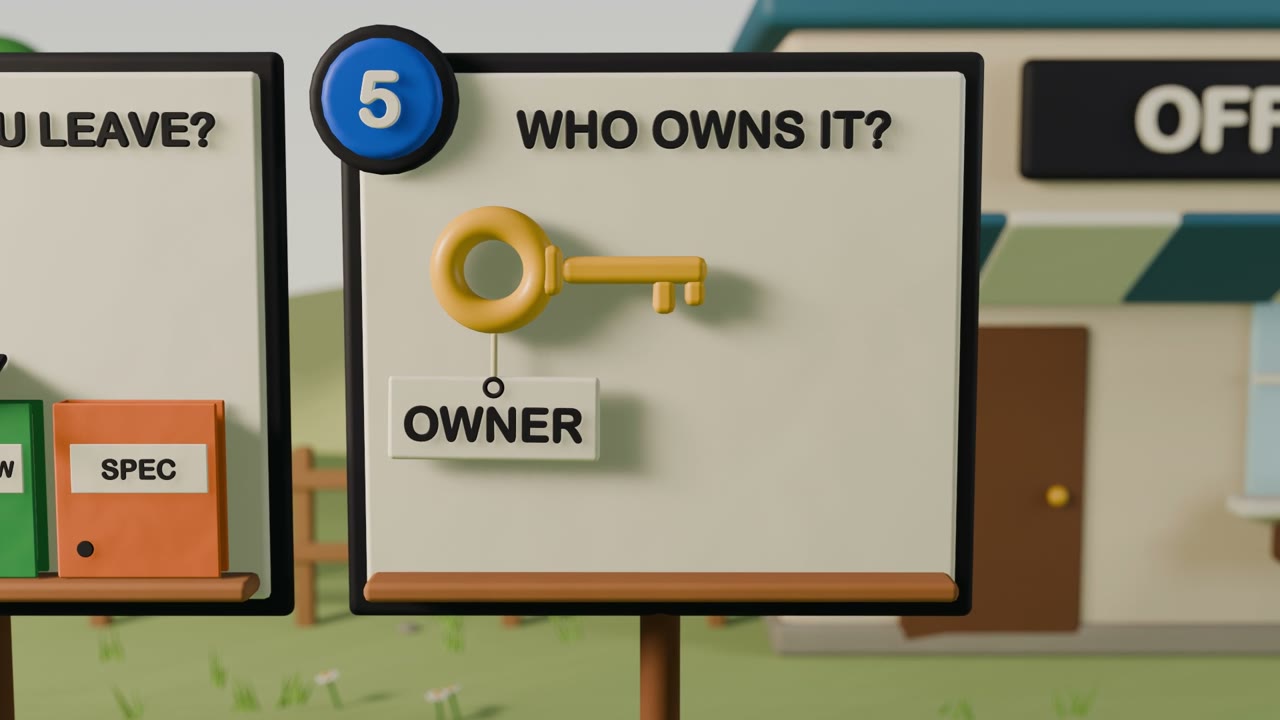
Who owns what I'm paying for?
Get it in writing.
Sources
Where the numbers and the history in the episode come from.
Want one in your business?
That's what we do at Benmore: forward deployed engineers who build inside your business.
Talk to Benmore